Wooded Lots Cleared With Mulch Left for Stabilization
Forestry Mulching in Franklin for land clearing, brush removal, and overgrown property restoration without separate haul and chipping costs
Forestry mulching clears trees, brush, and undergrowth by grinding vegetation into nutrient-rich mulch that remains on-site, providing erosion control and preparing land for development or landscaping. Legacy Land Management uses brush hog attachments on skid loaders to mulch wooded lots and overgrown properties across Franklin, Whiteland, Greenwood, and surrounding areas. Franklin-area properties with overgrown fence lines, wooded building pads, or brush-choked drainage areas benefit from mulching because the process eliminates separate clearing, chipping, and haul steps that increase costs and timelines.
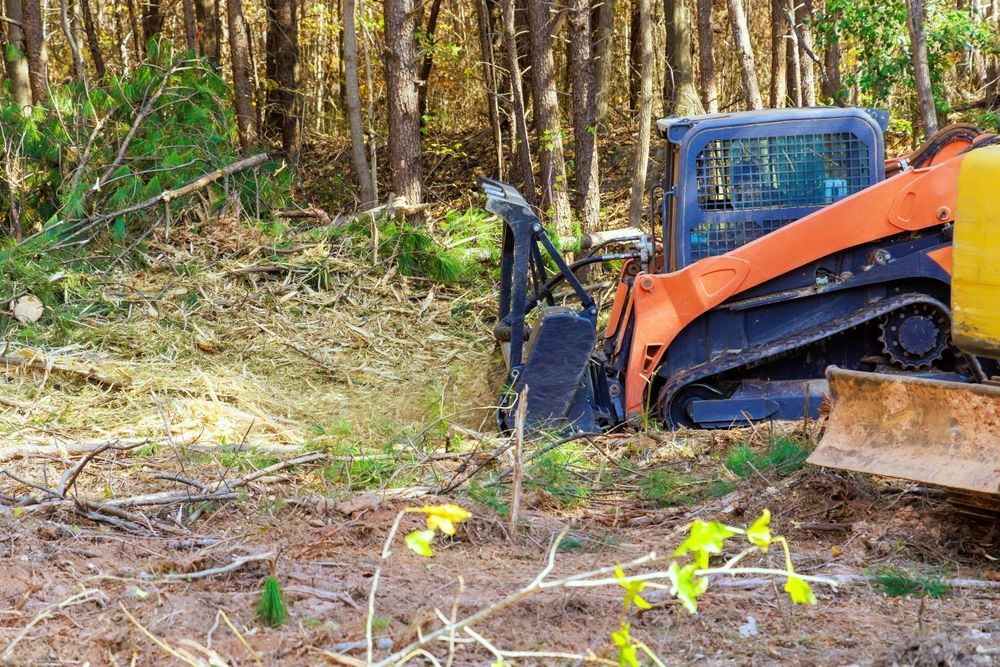
The brush hog grinds standing trees, stumps, and brush into chips that spread evenly across the cleared area. On-site mulch placement reduces erosion on sloped lots, suppresses weed regrowth, and improves soil as the material decomposes. This single-pass approach avoids the cost and coordination of hiring separate clearing and chipping contractors or arranging debris haul permits and dump fees.
Request a property evaluation to determine clearing limits and mulch depth for your wooded lot or overgrown area.
How Mulching Clears Land While Improving Site Conditions
Mulching work involves positioning the skid loader with brush hog attachment at the clearing boundary, then systematically grinding vegetation from one edge to the other. The rotating drum with cutting teeth shreds trees up to several inches in diameter, along with saplings, vines, and undergrowth, discharging the mulched material behind the machine as it advances. The operator adjusts ground speed and drum engagement based on vegetation density—lighter brush clears quickly, while thicker stands require slower passes to fully process the material.
Once mulching is complete, the cleared area shows exposed ground covered with a layer of wood chips ranging from one to several inches deep depending on vegetation density. The mulch layer prevents soil erosion during rain, retains moisture for future planting, and eliminates the bare, compacted soil that results from traditional clearing and burning. Property owners see defined lot boundaries, improved access for equipment or construction, and a stable surface ready for grading, seeding, or development without additional site prep.
Mulching does not remove large tree stumps or root systems below ground—it grinds above-ground vegetation and surface roots, leaving the cleared area suitable for landscaping, pasture, or light construction. Projects requiring building pads or utility trenches may need follow-up grading or stump grinding if roots interfere with excavation or foundation work.
Common Questions About This Service
Forestry mulching raises questions about equipment capabilities, site suitability, and results compared to traditional clearing methods. The following addresses what property owners typically ask before starting land clearing projects.
What size trees can forestry mulching handle effectively?
Brush hog attachments on skid loaders typically process trees up to six inches in diameter—larger trees may require chainsaw felling before mulching or separate removal depending on equipment capacity and site access.
How does mulching affect future planting or landscaping on the cleared area?
The mulch layer improves soil as it decomposes, retains moisture, and suppresses weeds, creating favorable conditions for seeding or planting once the site is graded and ready for landscaping.
What happens to the mulch after it's left on-site in Franklin's climate?
Central Indiana's freeze-thaw cycles and seasonal moisture accelerate decomposition—mulch typically breaks down within one to three years depending on thickness, adding organic matter to the soil and reducing over time.
When should forestry mulching happen relative to other site work?
Mulching occurs early in the development process, after property boundaries are marked but before grading or construction—clearing first allows equipment access and site evaluation without vegetation obstructing layout or drainage planning.
How does on-site mulching reduce costs compared to traditional clearing?
Mulching eliminates dump fees, haul truck rental, chipping equipment, and labor for loading and removing debris—material stays on-site as a beneficial soil amendment rather than a disposal expense.
Legacy Land Management operates mulching equipment directly on each clearing project, adjusting the approach based on vegetation type, terrain, and intended site use after clearing. Set up a site visit to walk the property, identify clearing boundaries, and discuss how mulch depth and distribution align with your development or landscaping plans for the Franklin area.